
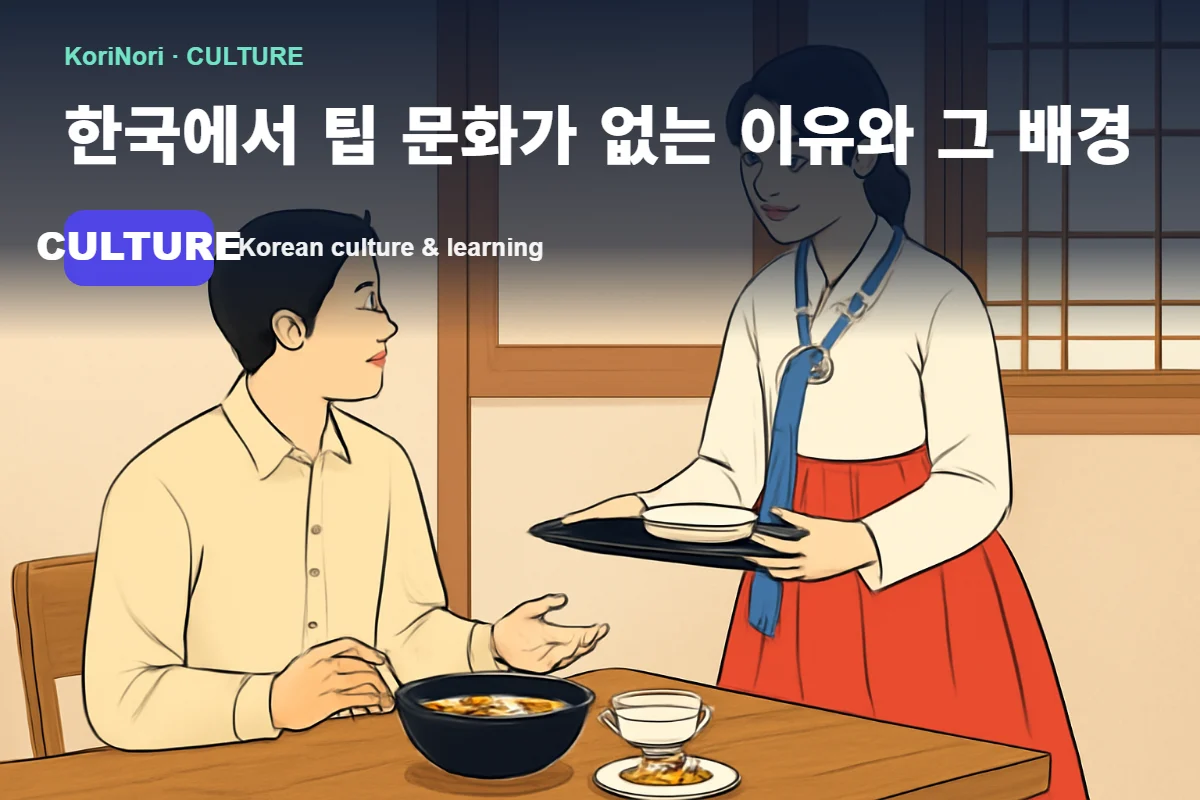
In Korea, you will rarely find a tipping culture. While tipping is common abroad as a way to appreciate service workers, Korea has developed differently. This article dives into why tipping is not practiced in Korea and the historical and social background behind this phenomenon.
Background of the Absence of Tipping in Korea
In Korea, service charges are often included in the price of food or services. Therefore, service providers receive fair compensation without the need for separate tips. This system allows customers to enjoy services without feeling obligated to tip.
Moreover, Korean society values horizontal and equal relationships strongly. This cultural value minimizes hierarchical relations between service staff and customers, making it difficult for monetary gratuities like tips to become established.
Economic and Institutional Factors
Korea enforces minimum wage laws relatively strictly, ensuring stable wages for service workers legally. Unlike some foreign service sectors that rely on tips, Korea’s service industry operates well without tipping.
Misconceptions and Reality
Some foreign tourists think tipping is a courtesy, but in Korea, unexpectedly offering tips might cause embarrassment or refusal. Understanding that tipping culture is absent helps travelers navigate more comfortably.
In Summary
To summarize, the absence of tipping culture in Korea arises from a pricing structure that includes service fees, societal values emphasizing equality, and a stable wage system. When visiting Korea, it is best to understand these cultural facts and behave as naturally as locals do.
Related KoriNori lessons
🎧 Native Korean Pronunciation
Listen to a native Korean speaker and repeat each item slowly.
한국에서 팁문화가 없는 이유
2 thoughts on “Why There Is No Tipping Culture in Korea and Its Background”