
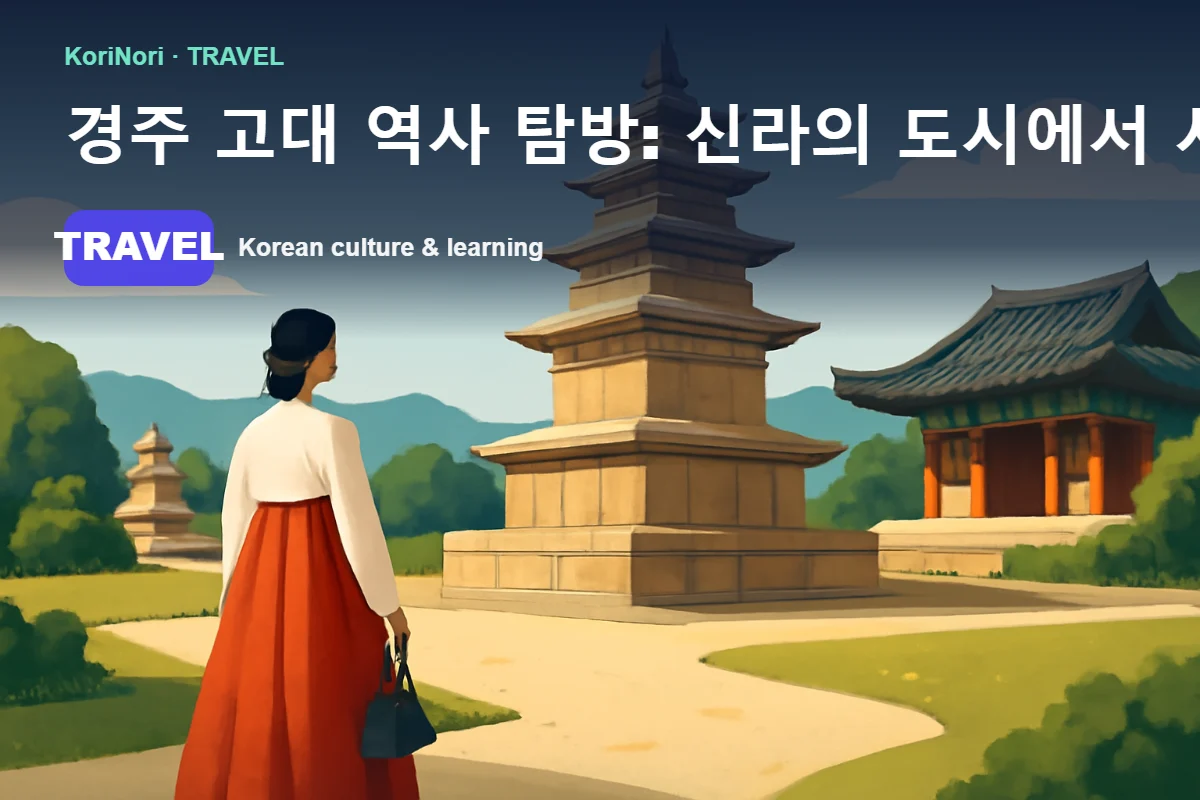
If you’re eager to journey through Korea’s ancient past, Gyeongju is a special destination not to miss. Situated in North Gyeongsang Province in southeastern South Korea, this city was once the capital of the Silla Kingdom. Walking through its streets, you’ll encounter massive royal tombs and ancient stone remains, and with a short journey, you can visit temples and grottoes that showcase the essence of Silla’s Buddhist culture.
Yet Gyeongju’s charm isn’t limited to history alone. The vibrant Hwangnidan-gil area, lined with traditional hanok-style cafés and distinctive shops, lets you experience contemporary Korean travel culture. You can explore historic sites by day, relax in cozy alleys in the afternoon, and enjoy the illuminated pond view at night.
Why is Gyeongju called the ‘Millennium Capital of Silla’?
For those unfamiliar with Korean history, it’s important to first understand Silla. Alongside Goguryeo and Baekje, Silla was one of the Three Kingdoms of ancient Korea, founded in 57 BCE and lasting until 935 CE. Gyeongju served as its capital for nearly a thousand years, known then as Seorabeol, acting as the political and cultural heart of the kingdom.
In the 7th century, Silla conquered Baekje and Goguryeo, uniting much of the Korean Peninsula. During the Unified Silla period, Buddhist culture and arts flourished greatly. The Buddha statues, stone pagodas, temples, and royal palace sites you see in present-day Gyeongju are important legacies helping us understand that history.
A unique feature of Gyeongju is how close historical sites are to daily life. You don’t just encounter the past inside museums, but discover traces of the ancient capital as you walk the streets and alleys.
In recognition of its value, the Gyeongju Historic Areas were inscribed as a UNESCO World Heritage Site in 2000. Bulguksa Temple and Seokguram Grotto were jointly registered separately in 1995. It’s important to understand that not all of Gyeongju’s sites are included under one inscription, to better grasp the city’s heritage.
Daereungwon: Green Mounds Holding Kingdom History in the City Center
One of the first sights catching visitors’ attention in downtown Gyeongju is a collection of large, round, green mounds. Though they may appear as natural small hills, these are actually ancient burial mounds from the Silla era. Daereungwon is a representative site gathering these tombs.
Visiting Daereungwon, besides enjoying the lovely walking scenery, consider that it reflects funerary culture and power of the ancient people. The size of tombs and excavated artifacts offer clues to understand Silla society and culture.
The Cheonmachong tomb is a key attraction where you can explore the tomb’s interior structure and related exhibitions. The name ‘Cheonma’ means a heavenly horse. It’s ideal for travelers interested in deeper understanding of Silla burial constructions beyond merely admiring their exteriors.
As royal tombs are both cultural heritage and burial sites, it’s important to follow designated paths and avoid climbing on mounds or entering restricted areas.
Cheomseongdae: Why Did Silla People Observe the Sky?
Cheomseongdae stands as a hallmark stone structure of Gyeongju, known as one of the oldest existing observatories. If you expected a huge modern observatory, its modest size might surprise you. However, its historical significance and symbolism outweigh its size.
When viewing Cheomseongdae, imagine how ancient people understood the sky. Long before smartphones or precise observational instruments, watching celestial movements was key to understanding natural changes.
Visitors can stroll around Cheomseongdae and admire its form from outside. Seasonal changes alter surrounding sceneries, so it’s recommended to leisurely explore the nearby parks rather than rushing on after seeing only the observatory.
It pairs well with visits to downtown attractions like Daereungwon and Hwangnidan-gil.
Hwangnidan-gil: Experiencing Modern Korea in an Ancient City
If you want a break between site visits or a meal, Hwangnidan-gil is a great choice. Located in the Hwangnam-dong area, this street is a popular tourist spot featuring hanok-style cafes, restaurants, photo studios, and souvenir shops.
Enjoy coffee in alleys lined with traditional eaves and tiled roofs, or browse unique souvenir shops. Though all are hanok buildings externally, interiors and business styles differ, offering a fun exploration experience.
Note that Hwangnidan-gil is not a preserved street from Silla times. Its charm lies in combining the atmosphere of the old capital with modern café and commercial spaces. It’s interesting to distinguish between historical sites for learning Silla history and vibrant spots showcasing current lifestyle and tourism culture.
Close to Daereungwon and other downtown sites, it’s convenient to stop here for meals or rest. You might first visit historical sites, then unwind in this charming area.
Donggung Palace and Wolji Pond: Royal Gardens and Night Views
Donggung Palace and Wolji Pond encompass ruins of the Silla royal secondary palace and pond, evoking royal life and festivities. Historically known as Anapji Pond, older travel references use that name for the site.
Rather than focusing only on structures, observe how the pond and surroundings integrate. Walking along the pond’s irregular edge reveals changing views from various points, hinting at how Silla people designed gardens to enjoy the scenery.
Especially known for night views, illuminated buildings reflected in the water create a different atmosphere after dark. Witnessing how heritage sites transform with light and water is rewarding.
If visiting at night, check daily visiting hours and closing times, and plan transportation back to lodging accordingly.
Bulguksa: Expressing Silla Buddhist Culture in Stone and Architecture
Bulguksa Temple is key to understanding Unified Silla’s Buddhist culture and architectural beauty. Along with Seokguram Grotto, it’s a UNESCO World Heritage Site located around Mount Toham.
Observe stone terraces, stairs, and spatial arrangement reflecting Buddhist ideals. Even without deep religious background, one can appreciate its balanced layout and intricate stonework.
Front structures like Dabotap and Seokgatap pagodas are main attractions, showcasing diversity in Silla stone art through their differing forms.
As an active temple and tourist site, please lower your voice in prayer areas and follow guidance on indoor access and photography.
Seokguram Grotto: Intricate Buddhist Art in Granite
Seokguram is an artificial grotto assembled from granite blocks, not a natural cave. Inside, the main Buddha and surrounding Buddhist sculptures are harmoniously arranged, exhibiting Unified Silla’s sculptural and architectural skills.
For foreigners, it may be simpler to think of it as a religious space designed as a singular artwork. Pay attention to the Buddha’s facial expression, posture, and surrounding sculptures that create the overall ambiance.
Bulguksa and Seokguram are often introduced together but are not located side by side. They require separate transport, and travel distance differs due to roads and mountain paths. It’s best to plan them as distinct visits rather than expecting quick transfers.
National Gyeongju Museum: A Perfect Stop Before or After Visiting Sites
If you want to learn more about the royal tombs and temples’ historical contexts, the National Gyeongju Museum is recommended. Exhibitions on Silla’s history, art, and royal life help answer questions raised by outdoor sites.
Silla History Hall covers founding and development, the Silla Art Hall showcases Buddhist art, and the Wolji Exhibit helps understand finds from Donggung Palace and Wolji Pond.
The museum’s highlight includes the Emille Bell (Seongdeokdaewang Sinjong), a large bronze bell completed in 771.
Travelers new to history may visit the museum first to build background knowledge before going to sites. Alternatively, visiting sites first and then the museum offers fun connections linking places and artifacts.
Tasting Local Snacks in Gyeongju
During your trip, try local treats like Hwangnam bread filled with red bean paste and barley bread known as Chalbori bread. They make convenient snacks or souvenirs while touring.
Hwangnidan-gil also offers various cafes and eateries. Note not all food sold here dates back to Silla times; enjoy both long-loved local dishes and modern tourist snacks.
If you have allergies or dietary restrictions like vegetarianism, always check ingredients before ordering, as menu names may not reveal all components.
Suggested Itineraries for First-Time Visitors
One-day plan: Explore downtown history and Hwangnidan-gil
Daereungwon → Lunch and rest at Hwangnidan-gil → Walk around Cheomseongdae → Evening view at Donggung Palace and Wolji Pond
This compact plan focuses on central attractions, starting with royal tombs, experiencing modern-day Gyeongju at Hwangnidan-gil, and finishing with historical evening scenery. Allow enough time to rest between spots to avoid fatigue.
Two-day plan: Combine downtown and Buddhist heritage
Day 1: Daereungwon, Hwangnidan-gil, Cheomseongdae, Donggung Palace and Wolji Pond
Day 2: Focus on Bulguksa and Seokguram
Separating city and temple areas helps reduce travel strain. If including the National Gyeongju Museum, consider shortening day 1 or adjusting temple tour time. Spending more than two days allows deeper exploration at each site, especially for history enthusiasts.
Helpful Tips for Foreign Visitors
Distinguish downtown and outer area sites
While Gyeongju is one city, attractions are spread out. Planning separate visits for downtown and mountain temples eases your travel. Also, check Gyeongju Station’s location—although KTX trains stop there, it’s in Geoncheon-eup. Arrange transportation to your lodging and tourist spots accordingly.
Bring comfortable shoes and weather-appropriate gear
You’ll walk extensively among ruins and alleys. Prepare comfortable footwear, carry water and sunscreen, and dress for temperature variations, particularly if you plan to enjoy nighttime views.
Verify operating hours and admission fees in advance
Outdoor sites can have varied opening times and conditions; museums, temples, tomb interiors, and night viewing places differ. Before traveling, review the latest info on Gyeongju Official Tourism Site, Korea Tourism Organization VISITKOREA, and the National Gyeongju Museum.
Gyeongju: A City Where Ancient History Meets Modern Life
Exploring Gyeongju is more than visiting sites; it’s a journey through nearly a millennium of kingdom history intertwined with modern daily life. Standing before royal tombs and viewing Silla art in temples, then relaxing in hanok cafés offers a rich, balanced travel experience.
First-time visitors need not rush to see everything at once. Encounter Silla’s heritage at Daereungwon and Cheomseongdae, enjoy today’s Gyeongju in Hwangnidan-gil, and conclude with Donggung Palace and Wolji Pond’s night view.
For travelers wanting deeper insight into Korea, Gyeongju showcases a thousand years of kingdom legacy fused with contemporary living.
Related KoriNori lessons
- Why There Is No Tipping Culture in Korea and Its Background
- Korean Reading Practice 1: How to Read Korean Syllables Without Final Consonants (받침)
- Various Ways to Enjoy Japchae and Its Cultural Significance
🎧 Native Korean Pronunciation
Listen to a native Korean speaker and repeat each item slowly.
경주
첨성대
불국사
석굴암